[ 01 ]
Rammed Earth
Built from local soil with minimal cement. The walls store the day's heat and re-radiate it after dark, moderating the diurnal swing without active cooling.
A single-storey family residence designed for passive cooling
in the dry, hot continental climate of central Tanzania.
02 · Context
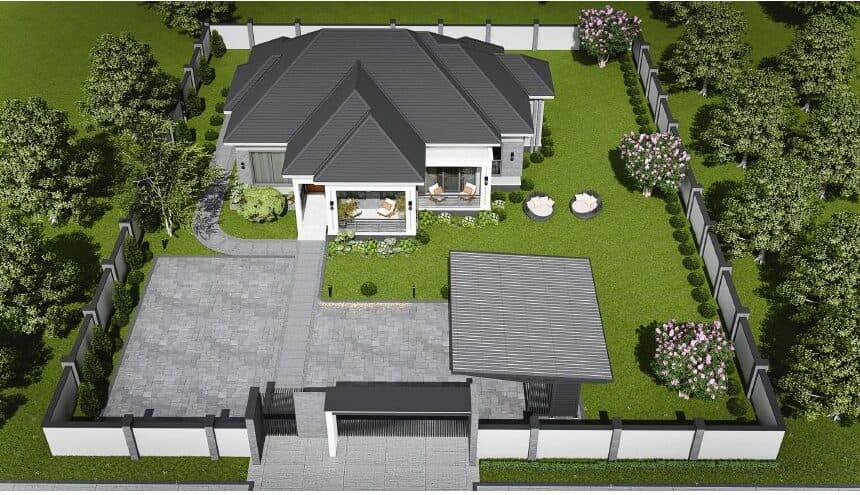
Singida sits inland on Tanzania's central plateau, roughly 1,500 m above sea level. The climate is semi-arid: long dry seasons, intense afternoon sun on the west elevation, and consistent breezes off the open plain to the south-east.
These conditions set the brief. A single-storey volume oriented to take prevailing wind across the living spaces, deep overhangs to shade the west, and walled outdoor rooms to give the family habitable shade through the hottest hours of the day.
Orientation
Long axis east–west to minimise west-facing surface area
Ventilation
Cross-flow drawn through paired veranda openings
Massing
Single-storey enclosure around a walled garden
Overhangs
Deep eaves over the west and north elevations
03 · Evolution
Phase 01
Early site sketches set the building's relationship to the plot edge, the carport, and the garden volumes. The walled enclosure and the twin-veranda arrangement were resolved at this stage.
Phase 02
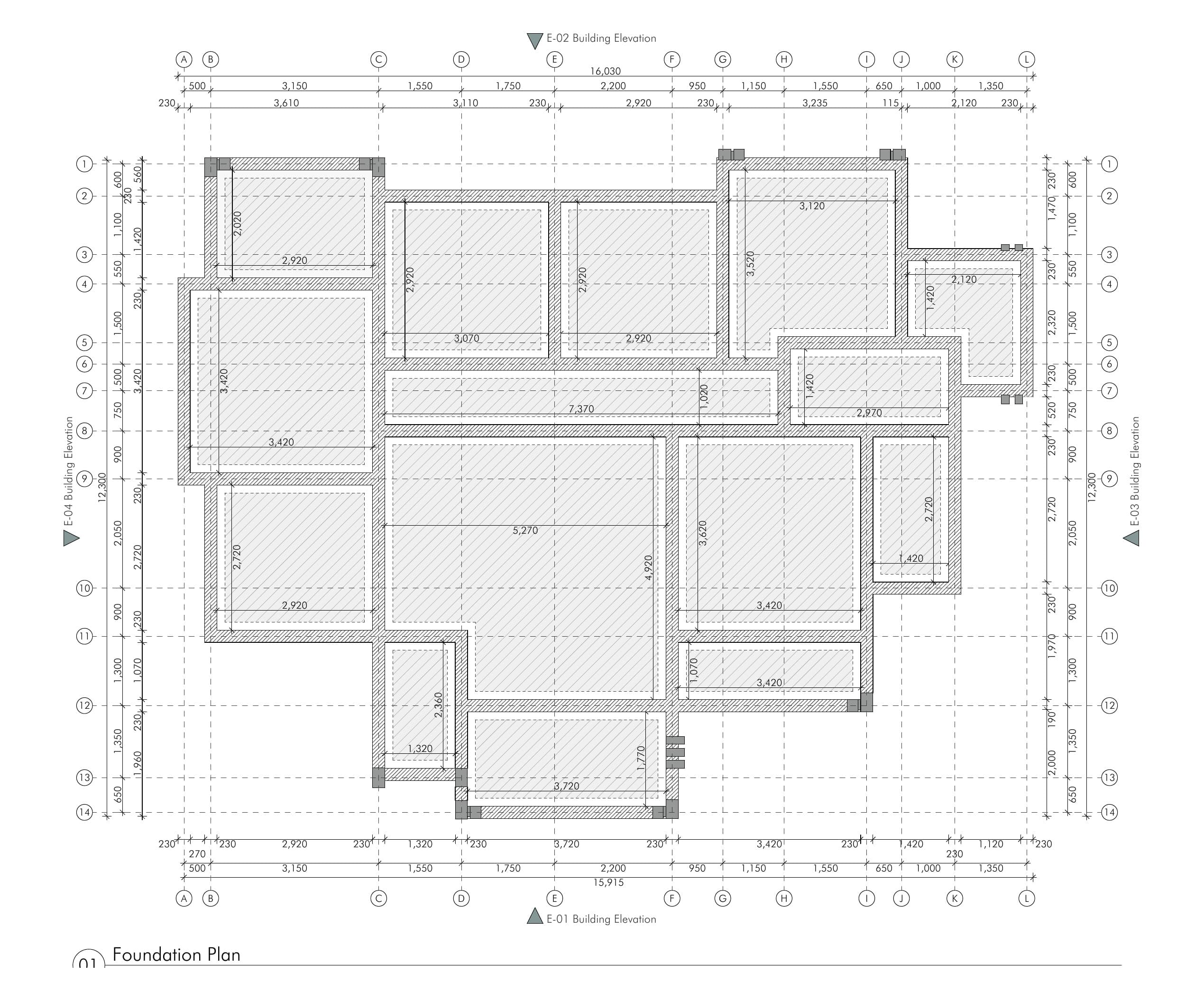
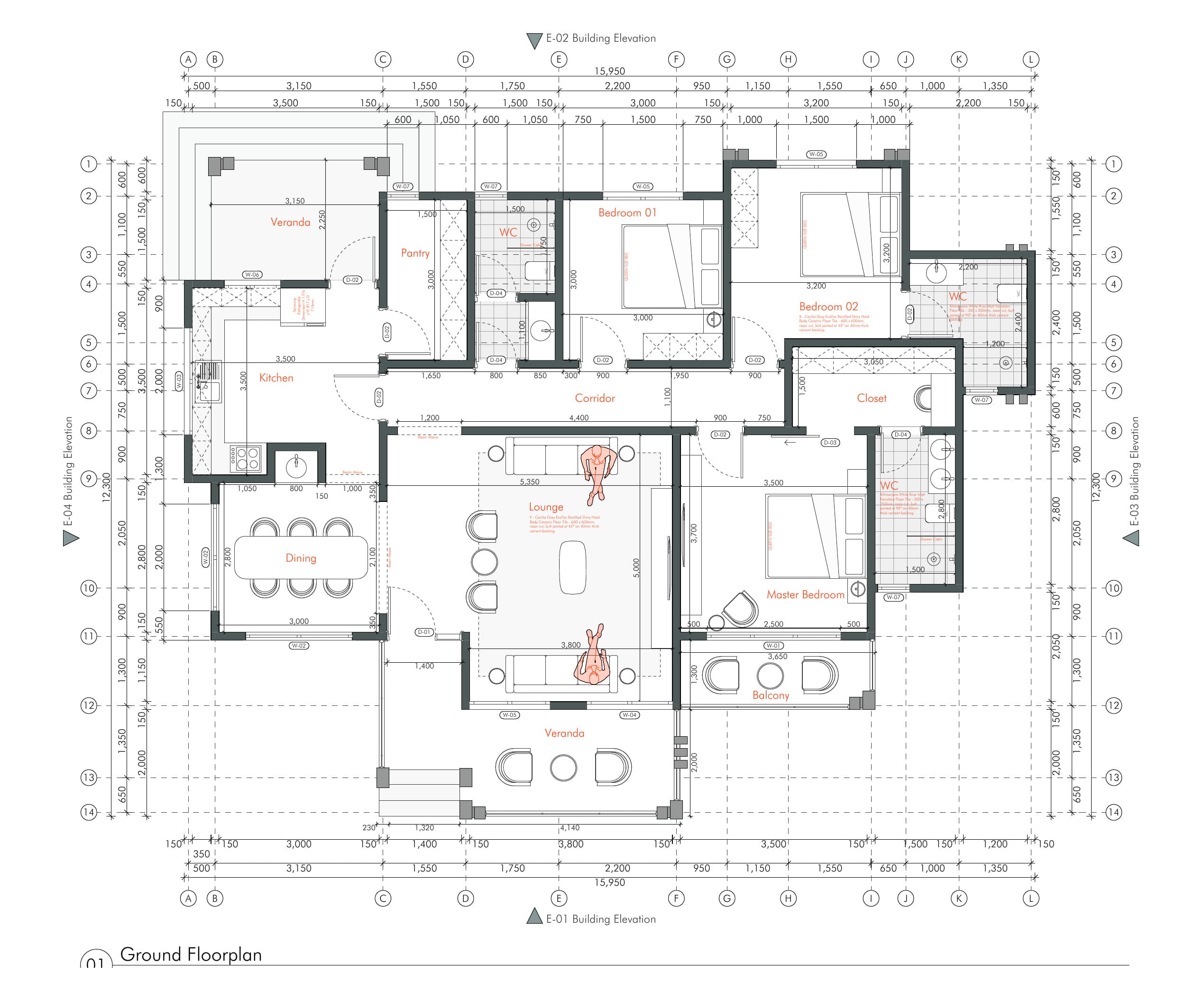
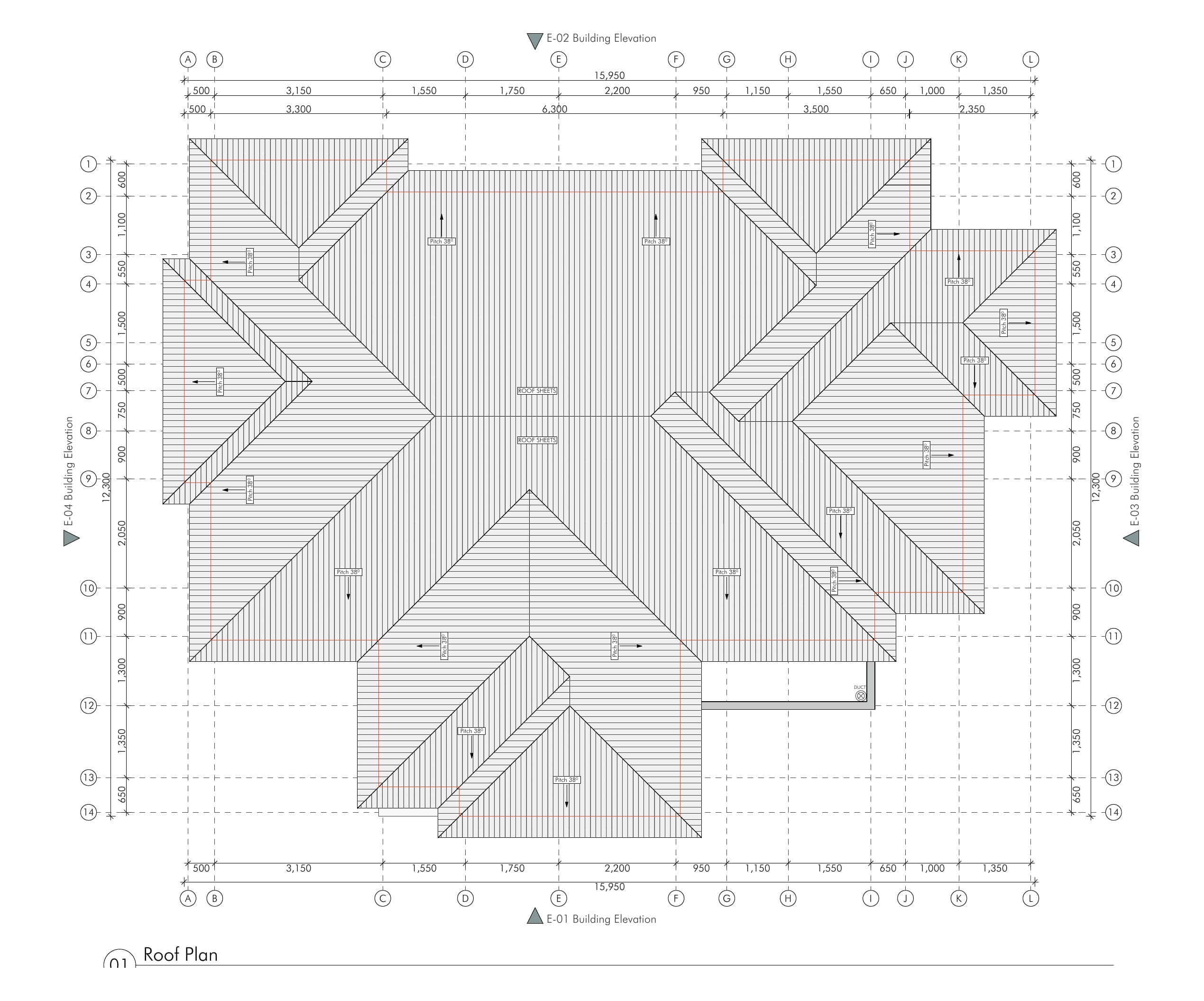
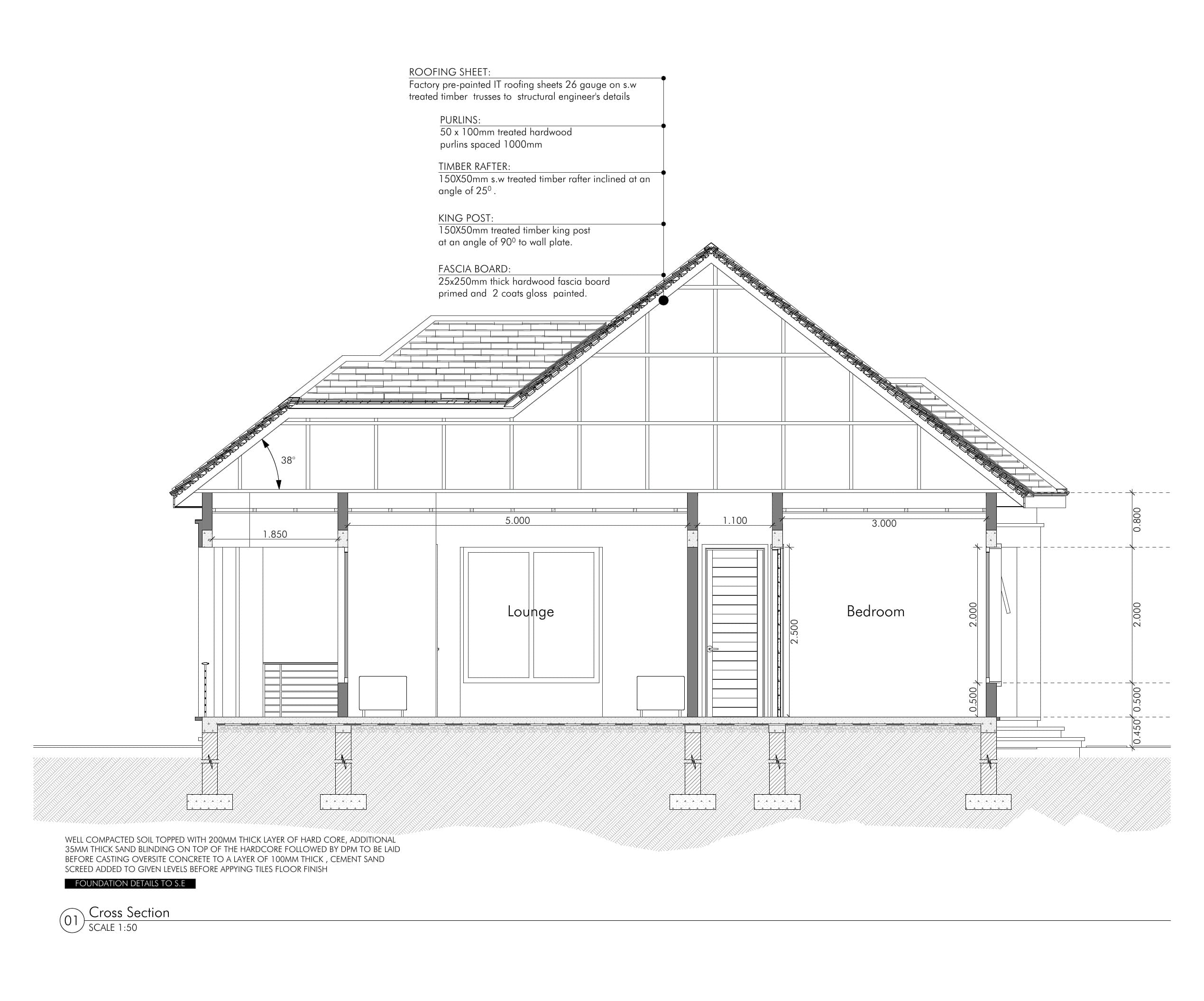
The full drawing package developed at 1:50–1:100 — foundation, ground floor, roof, and section. Room proportions, ceiling heights, and the structural module were locked in. Verandas, garden, and carport tied into a single continuous parti.
Phase 03
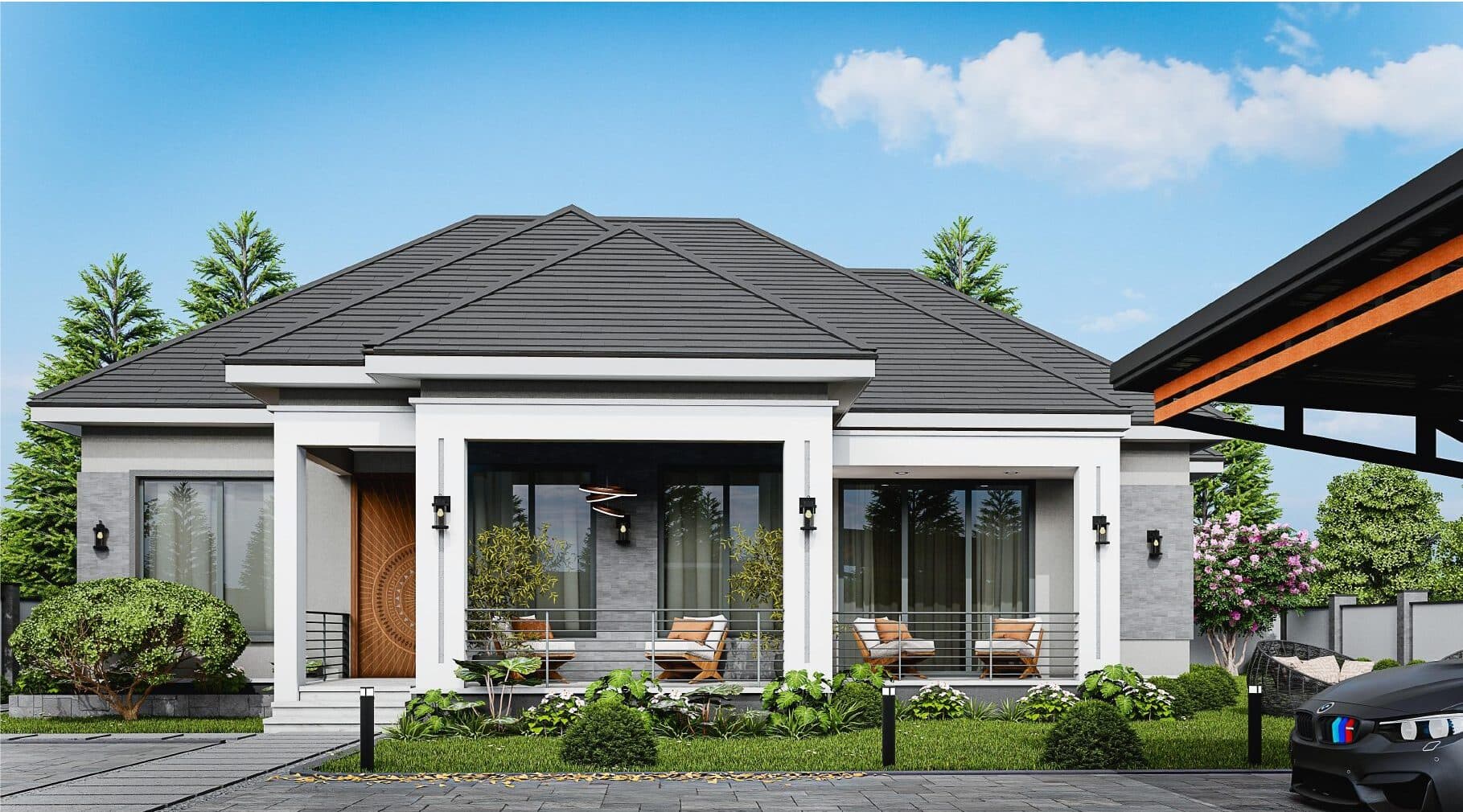
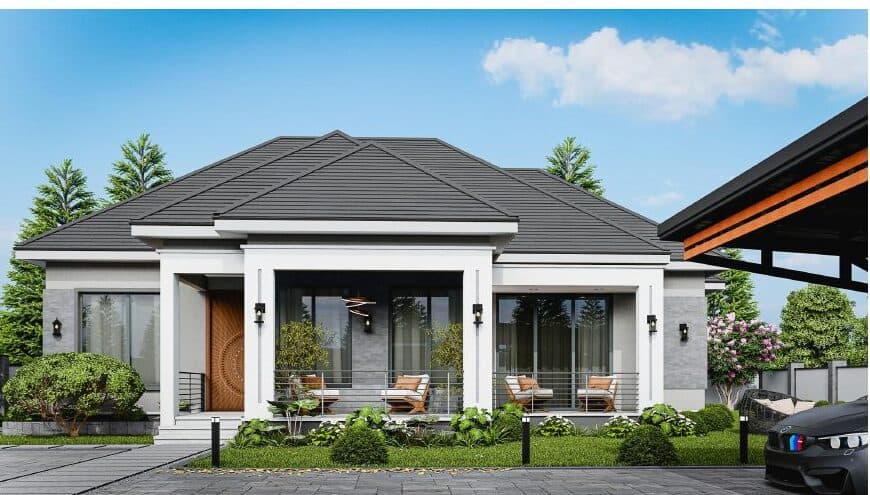
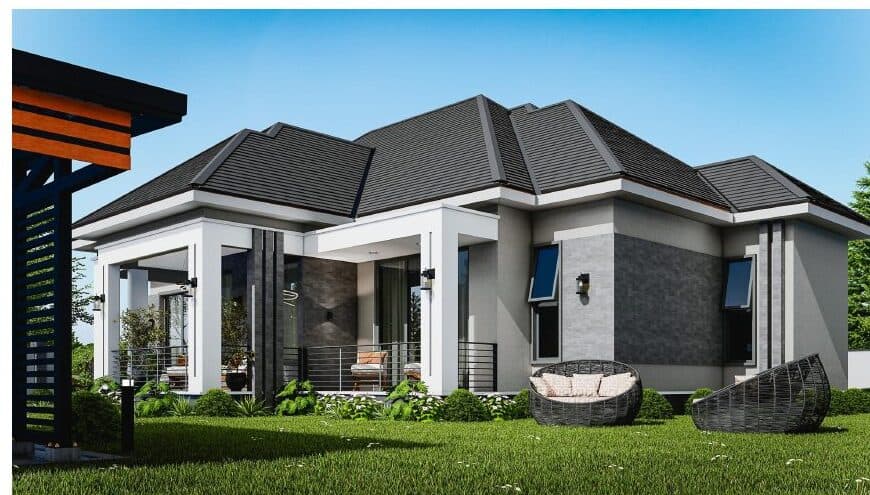
Photoreal renders confirm the entry sequence, material palette, and the relationship of the building to the garden under late-afternoon light. These guide material approvals and family sign-off before construction.
04 · Elevations
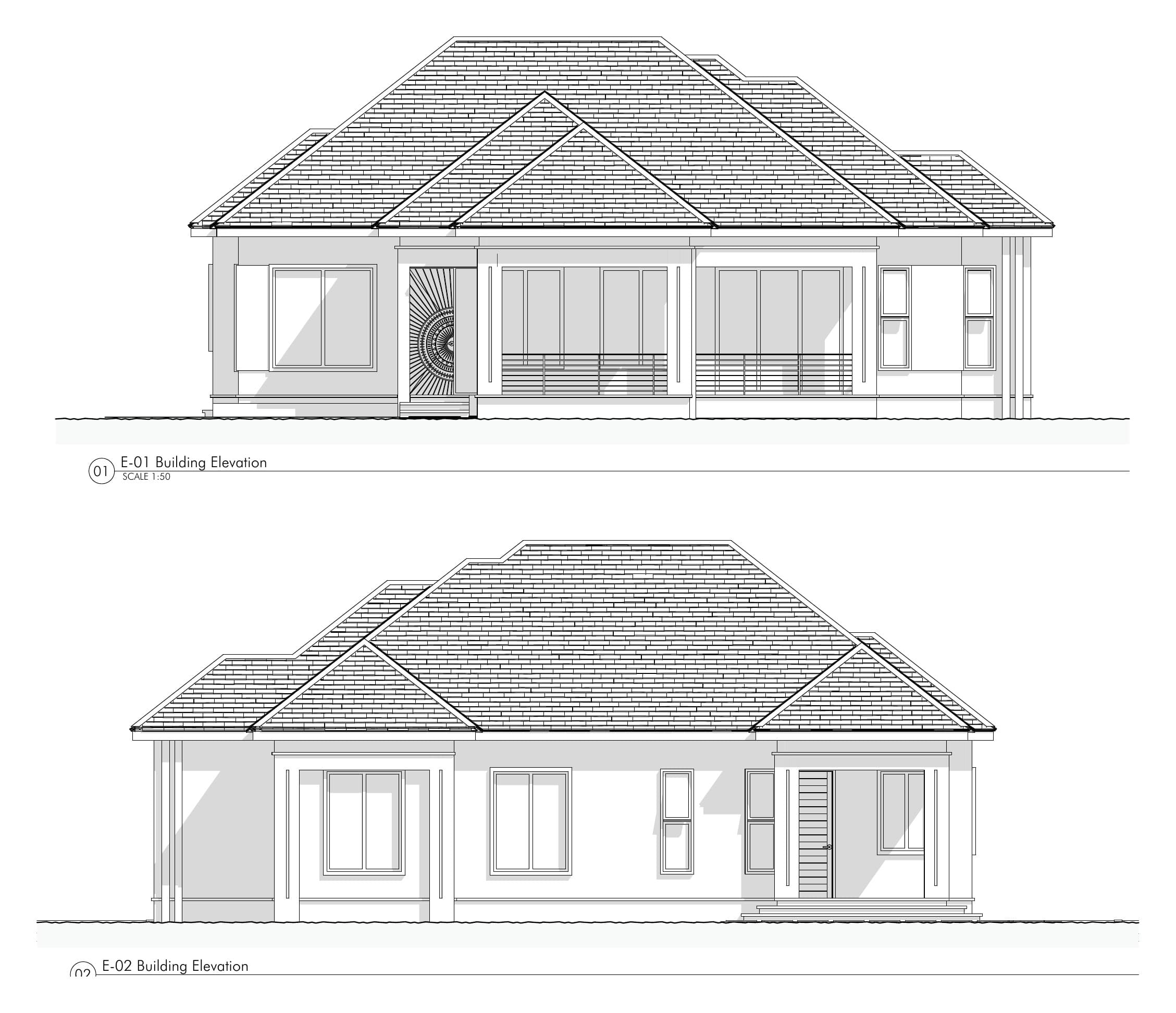
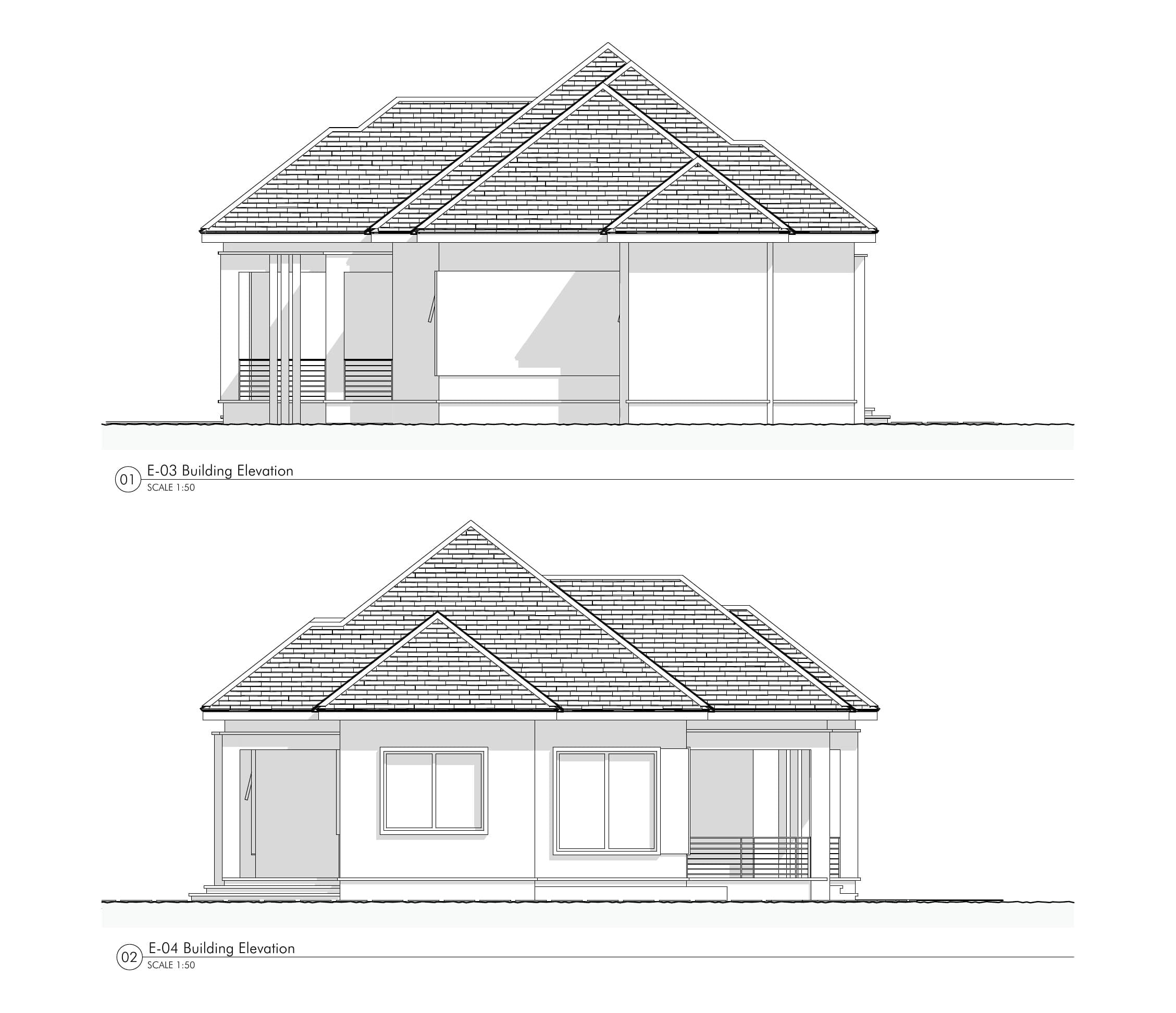
Four elevations resolve the building from each side. Window heads align, eaves run at a consistent datum, and the verandas read as a continuous frame around the family rooms.
05 · Materials
A short, deliberate palette — each element doing a specific job against heat, dust, and the long dry season.
[ 01 ]
Built from local soil with minimal cement. The walls store the day's heat and re-radiate it after dark, moderating the diurnal swing without active cooling.
[ 02 ]
Iroko and mvule used for joinery and brise-soleil. Locally sourced, low-embodied-energy, and naturally resistant to dry conditions and insects.
[ 03 ]
Locally quarried stone for the foundation course — durable against the moisture gradient at ground level and visually anchoring the volume to the site.
[ 04 ]
Breathable, alkaline finish that reflects rather than absorbs. The walls stay light, cool to the touch, and able to dry through after rare rains.
06 · Currently
Continuing studies on Singida — and briefs in early conversation.
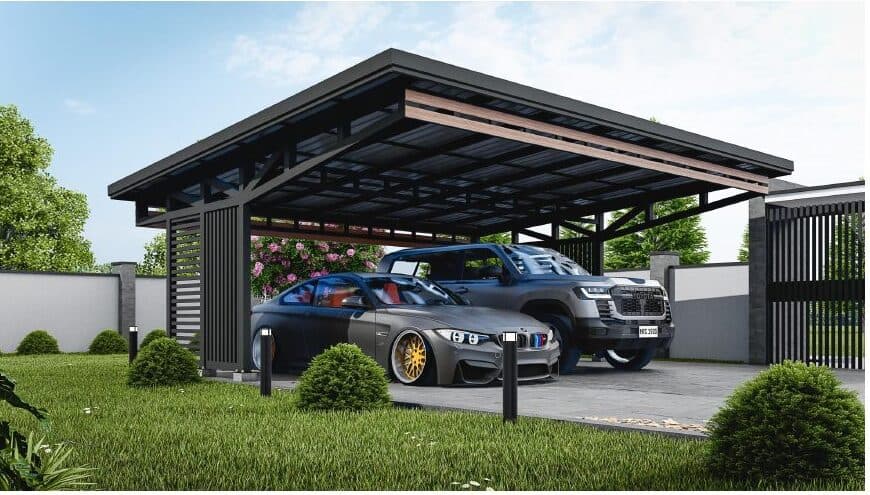
Detail studies for the covered carport, walled garden, and external paving — currently in resolution.
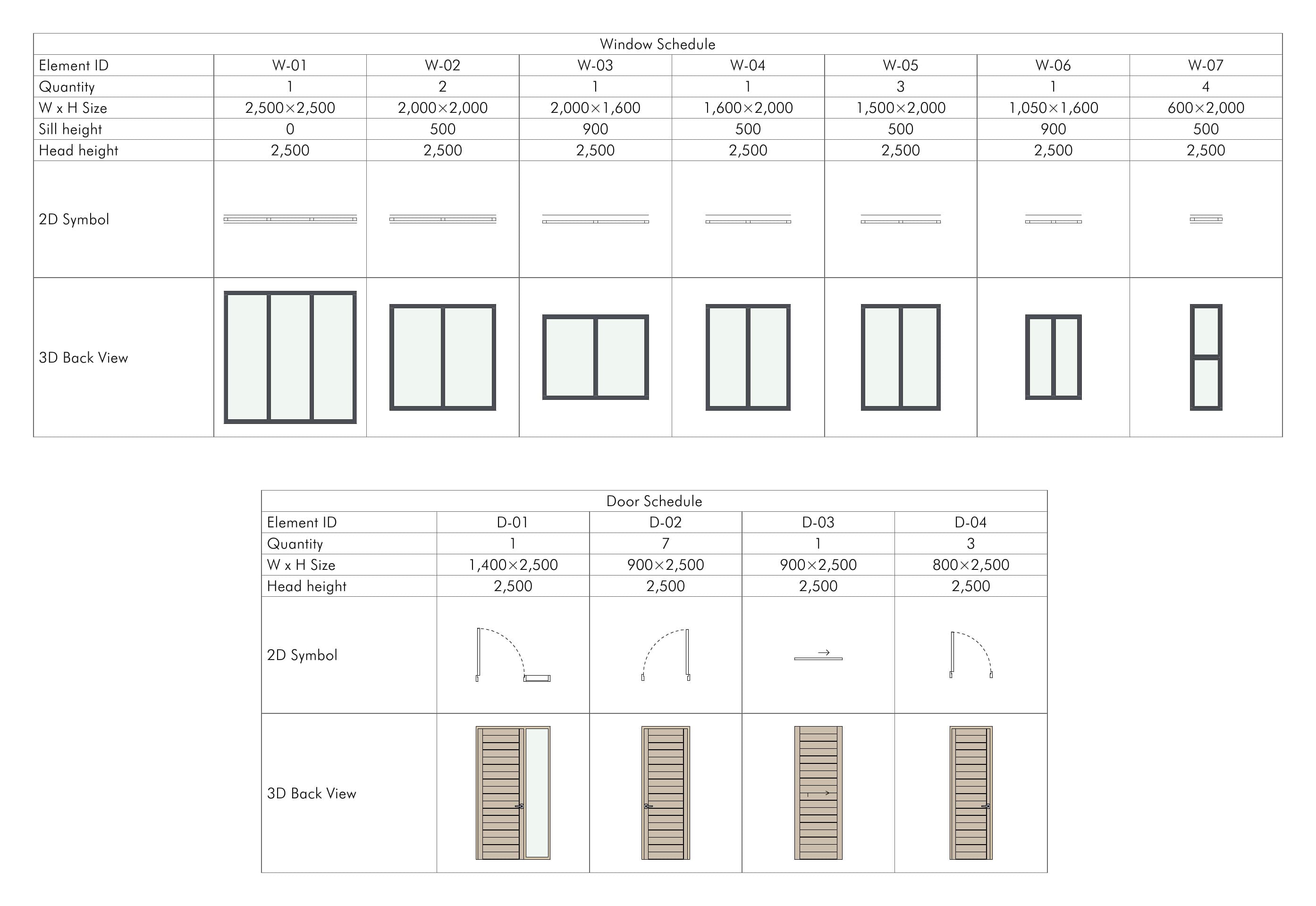
Joinery register, opening sizes, and operation logged for procurement and contractor briefing.
Practice · Interior Studies
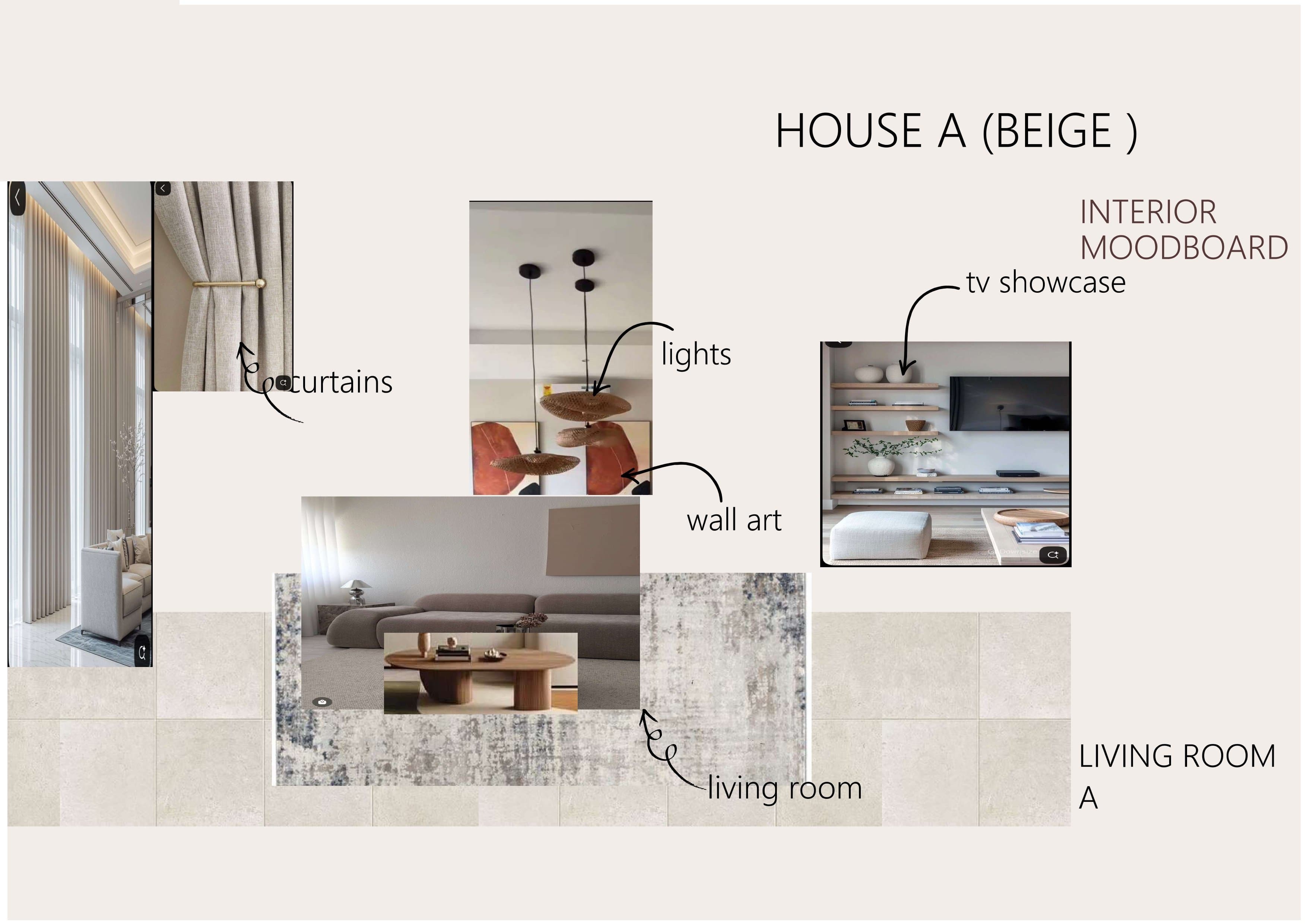
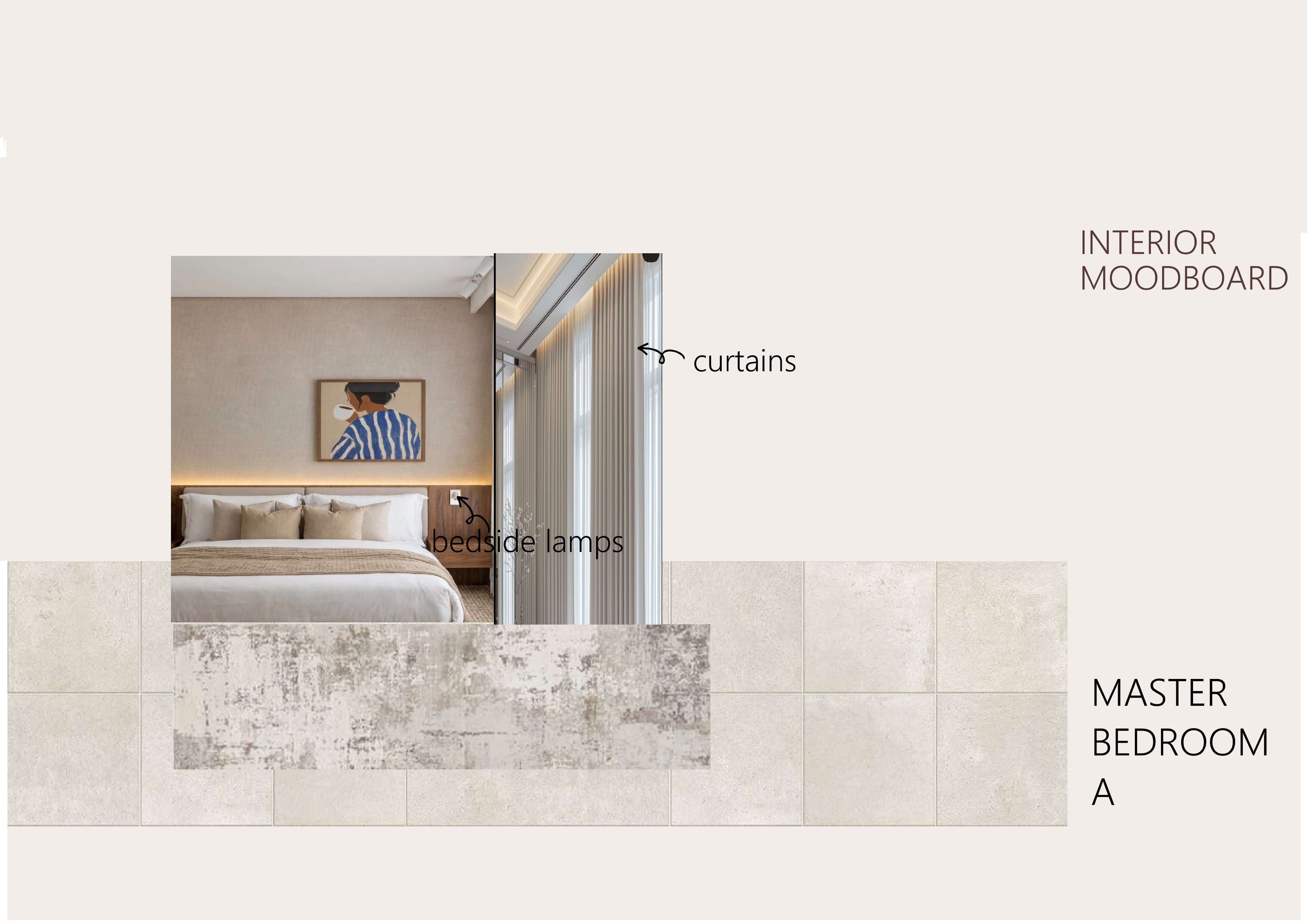
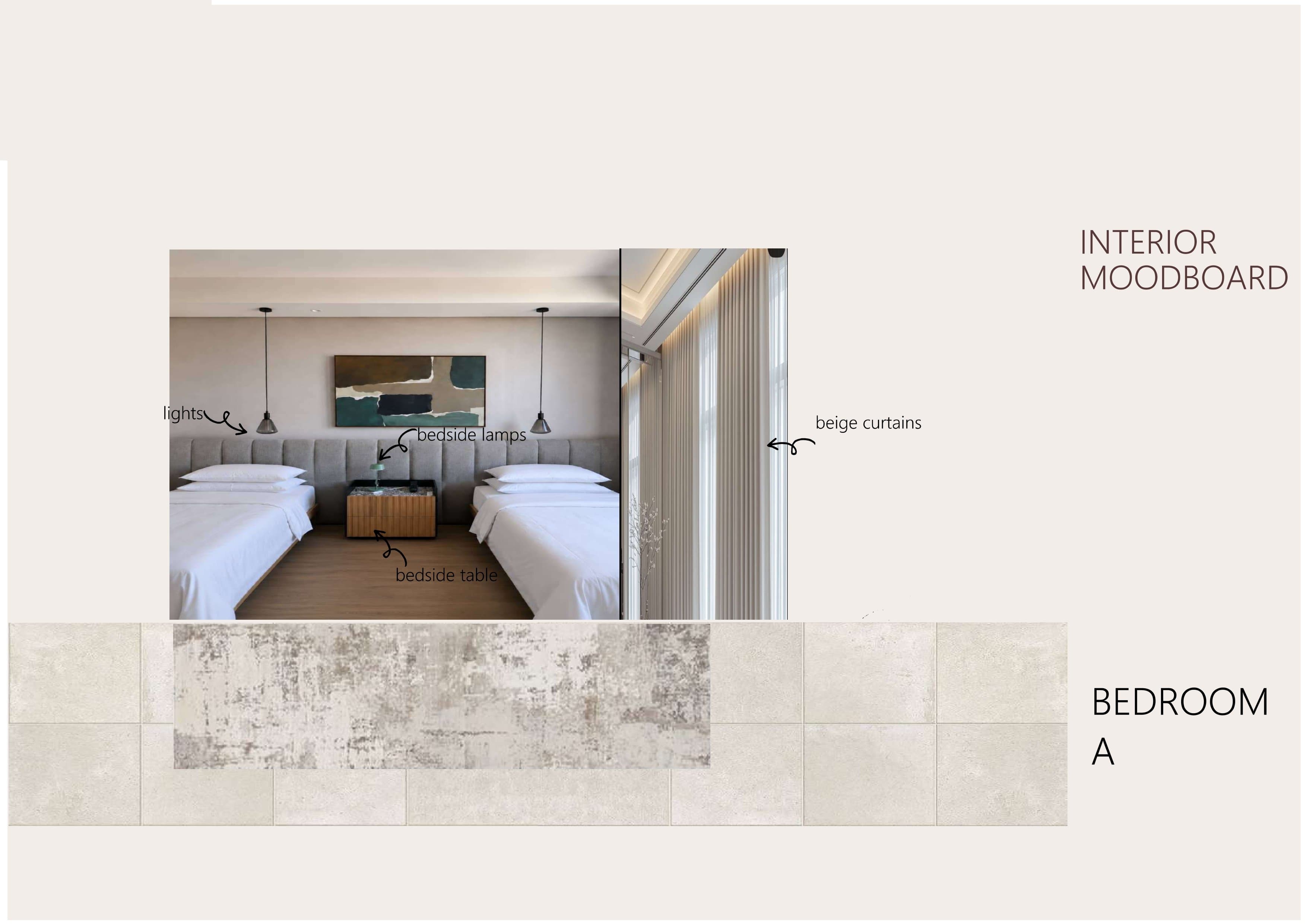
Before render, before drawing — the mood. Material direction, finishes, and furniture language agreed with the client before a single wall is built.